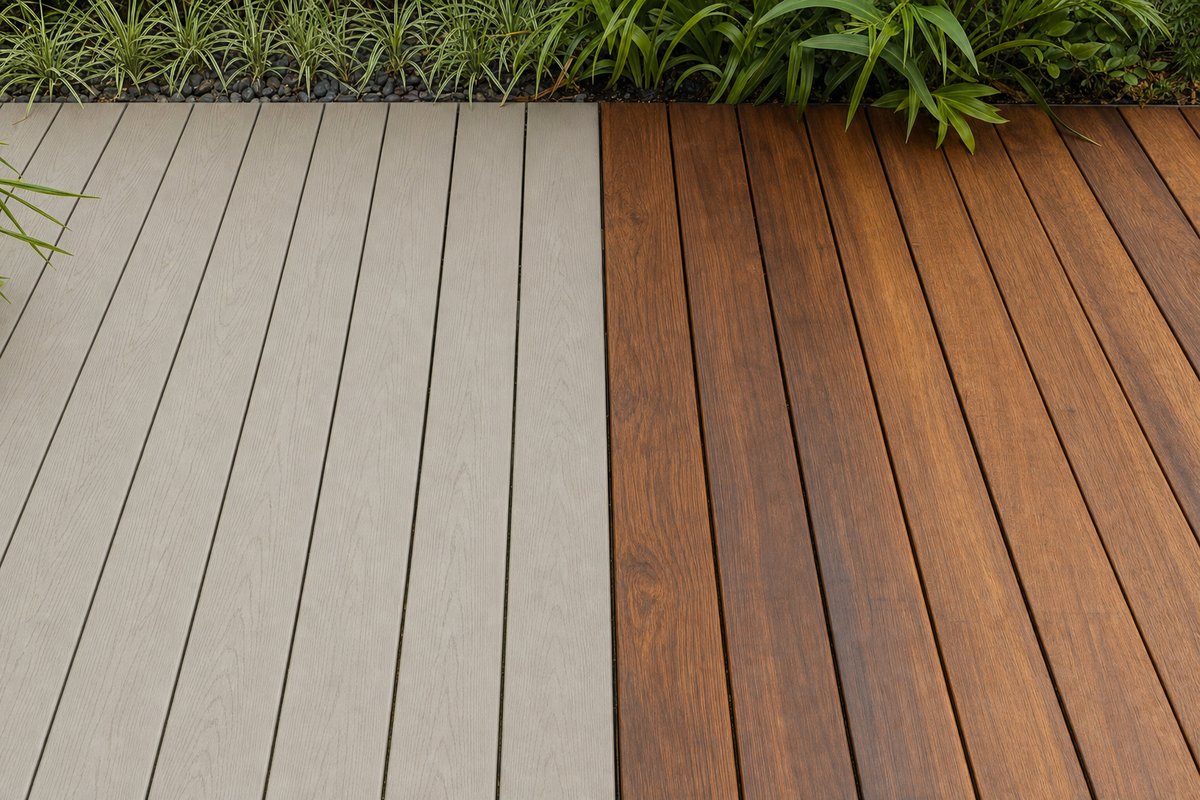
For most Jacksonville homes, composite decking is the better long-term value because it shrugs off the heat, humidity, and salt air that warp, rot, and fade wood. Pressure-treated wood costs less up front ($20-30/sq ft installed vs. $28-42 for composite), but it needs yearly sealing and won't last as long in NE Florida's climate. If you want a real-wood look without composite pricing, Ipe hardwood and AZEK PVC are also offered at $20-30/sq ft installed.
- Composite (including Trex and MoistureShield) is the most expensive material we install at $28-42/sq ft, but it never needs staining or sealing and resists Jacksonville humidity, sun fade, and salt-air damage.
- Pressure-treated wood is the lowest entry price ($20-30/sq ft installed) but requires sealing every 1-2 years and is more prone to warping and rot in coastal Duval, St. Johns, Nassau, and Clay counties.
- All decks we build meet Florida's 130-150 mph wind code; we're a FL-licensed GC, fully insured, and rated 4.9 stars on Google.
If you are picking between a composite deck and a wood deck in Jacksonville, here is the short version. Composite costs more up front but barely needs upkeep and lasts longer. Wood costs less to build but needs regular work to survive our humidity and sun. Below we break down the real differences so you can pick what fits your budget.
| Factor | Composite (Trex / MoistureShield) | Pressure-Treated Wood |
|---|---|---|
| Installed cost (per sq ft) | $28-42 (highest tier) | $20-30 (lowest tier) |
| Upkeep | Wash with soap and water; no staining or sealing | Reseal or restain every 1-2 years |
| Lifespan in NE Florida | Long; built to resist rot and insects | Shorter; prone to warping and rot in humidity |
| Heat underfoot | Warms in direct sun; choose lighter colors to stay cooler | Stays relatively cool; can splinter over time |
| Salt air & humidity | Holds up well to coastal moisture and salt | More vulnerable; needs diligent sealing near the coast |
| Look | Consistent color, wood-grain finish, low fading | Natural real-wood look that grays without upkeep |
| Best for | Homeowners who want low maintenance and long life | Lower up-front budget, willing to maintain it yearly |
We are Jacksonville Deck Builders, a brand of Coastal Outdoor Construction. We have built decks across Duval, St. Johns, Nassau, and Clay counties since 2013, so this comes from real builds in real Florida weather.
Upfront cost
This is where wood wins. You pay less the day it goes in.
- Pressure-treated wood: about $20–$30 per square foot installed
- Cedar: about $20–$30 per square foot installed
- Composite (Trex, MoistureShield, AZEK): about $28–$42 per square foot installed
In plain numbers, a 12x12 deck commonly runs about $2,900 to $6,000 depending on the material. Pressure-treated wood lands at the low end, composite higher. So if upfront price is all you care about, wood looks like the winner — but the day you build it is not the only cost that matters.
Lifetime cost
This is where composite catches up and usually passes wood. The reason is upkeep.
A wood deck in Jacksonville needs cleaning and a fresh coat of stain or sealer every year or two. Our sun and humidity are hard on wood, so skipping that work leads to graying, cracking, and rot. Over 10 or 15 years the cost of stain, sealer, and your time adds up — and wood does not last as long, so you may be replacing it sooner. (For more on that call, see our guide to whether to repair or replace your deck.)
Composite needs none of that — soap and water and you are done. No staining, no sealing, no sanding. Over the full life of the deck, the higher upfront price often evens out or comes out ahead because you are not paying to maintain it year after year.
Quick way to think about it: wood is cheaper to build, composite is cheaper to own.
Maintenance
If you do not want a yearly project, this matters a lot.
- Wood: wash it, then re-stain or re-seal every one to two years to keep it from graying and rotting. Watch for splinters and soft spots over time.
- Composite: rinse it off a couple times a year. No staining or sealing, ever, and it will not splinter.
In our humid, rainy climate, that upkeep gap is bigger than it sounds. A lot of Jacksonville homeowners go composite simply because they are tired of the yearly staining.
Not sure which fits your yard and budget? We will walk it with you during a free in-home estimate — no pressure, just honest numbers. Get your free quote or call (904) 944-9253.
Looks
Both can look great. They just look different.
Real wood has a natural grain and warmth a lot of people love, especially in cedar or a hardwood like Ipe. The trade-off is that it changes color as it ages and needs staining to hold its look.
Composite comes in a wide range of colors and wood-grain patterns, and holds that color for years without fading much. Today’s composite from Trex, MoistureShield, and AZEK looks far more natural than the older stuff. If you want a deck that looks the same in year 10 as it did on day one, composite has the edge.
Heat underfoot
This is a real Florida question. In our summer sun, any deck gets warm, and dark colors get warmest.
Dark composite can get hot underfoot on a sunny afternoon. If barefoot comfort matters, that is worth planning for. One option is AZEK, which runs about 30 degrees cooler underfoot than dark composite. Lighter colors help too, on both wood and composite. We will talk through color and material during your estimate so the deck is comfortable in July, not just pretty in a brochure.
How each holds up in Florida humidity, sun, and salt
This is the part that really separates the two in Northeast Florida.
Humidity and rain
Wood soaks up moisture, which leads to rot, warping, and mold if it is not sealed and maintained. Composite does not absorb water the same way, so it shrugs off our humid, rainy stretches with no rot.
Sun
Our UV is intense. Unprotected wood grays and dries out, which is why it needs re-staining. Composite resists fading and holds its color far longer.
Salt air
Near the coast in Jacksonville Beach, Ponte Vedra, or Fernandina, salt air is hard on everything. Composite handles salt well and will not corrode. Wood can still work near the water, but it needs more attention to stay in good shape.
One thing is the same no matter which you pick: the deck is only as good as what is under it. We engineer every deck to Florida 130–150 mph wind codes with hurricane-rated metal connectors and concrete footings, so the structure stands up to storm season.
So when does wood still make sense?
We build both, and we will tell you straight: wood is the right call for some homeowners. Wood may be your best fit if:
- You want the lowest possible upfront price and you are okay with upkeep.
- You genuinely like the look and feel of natural wood and do not mind staining it.
- You want a premium hardwood look — a wood like Ipe is dense, beautiful, and tough, and cedar gives that classic warm grain.
Composite is usually the better pick if you want a deck you can mostly forget about, you plan to stay in the home a long time, or you are right on the coast dealing with heavy salt and sun.
There is no single right answer — just the right answer for your yard, your budget, and how much weekend maintenance you want to sign up for. For most Jacksonville homeowners, composite is worth the higher upfront cost for the lower upkeep and longer life in our climate. But wood is a solid, honest choice when budget comes first or you love the natural look.
Want a real number for your backyard? We offer a free in-home estimate and an estimate, and the old-deck demolition and removal is included too. Compare your composite decking and wood deck options side by side, then build with an FL-licensed GC, fully insured, with 500+ decks built and a 4.9-star rating on Google. Call (904) 944-9253 or request your free quote.