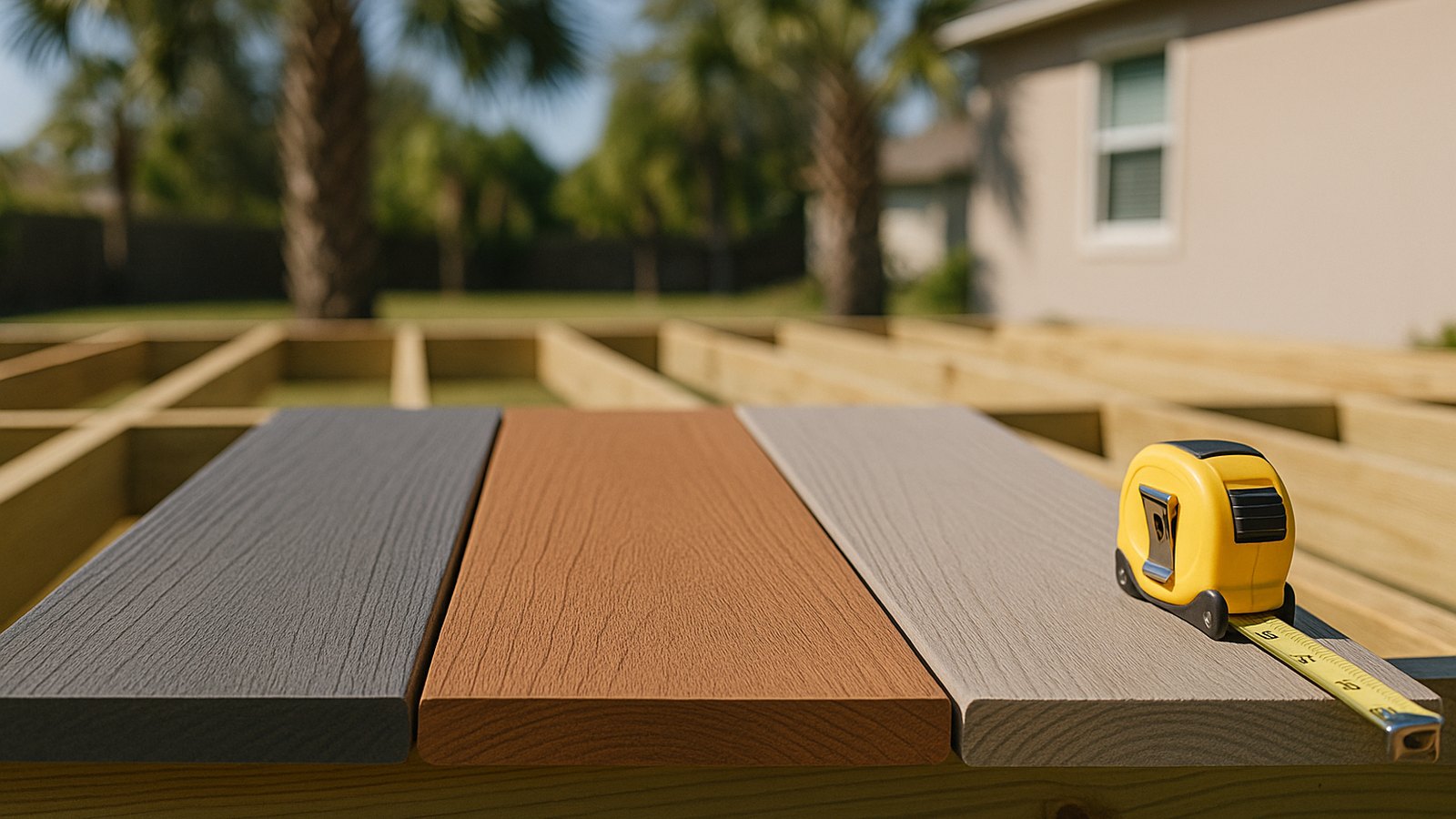
Trex vs AZEK vs MoistureShield comes down to the site. Trex is a proven capped composite and a strong all-round choice for most decks. MoistureShield is a capped composite whose core the manufacturer rates for ground and water contact, so it shines on low, damp or waterfront decks. AZEK is capped PVC with no wood inside, the lightest of the three and usually the coolest underfoot in lighter colors. In every brand, lighter colors stay cooler and the frame underneath matters as much as the boards on top.
Trex, AZEK and MoistureShield are the three names we get asked about most in Jacksonville. All three promise a deck you never have to sand, stain or seal, and all three deliver on that. So the choice is not about which board is good. It is about which one fits your yard.
The real differences come down to what each board is made of, how it handles heat and water, and where it is going: a sunny pool surround, a shaded deck that stays damp, or a low deck near the marsh. Here is how they compare.
What each board is made of
Trex is a capped composite: a core of recycled wood fiber and plastic wrapped in a hard polymer shell that resists stains, fading and scratches. Trex is known for its high recycled content and a long track record.
MoistureShield is also a wood-plastic composite, but its core is made to stand up to water. The manufacturer says its boards can be installed on the ground, in the ground or underwater without structural problems, which is unusual for a wood composite.
AZEK is capped PVC. There is no wood in it at all, so there is nothing organic to absorb water or feed mold. It is the lightest of the three boards.
For a deeper look at the difference between composite and PVC, see our guide to composite vs PVC decking.
Trex vs AZEK vs MoistureShield at a glance
| Feature | Trex | MoistureShield | AZEK |
|---|---|---|---|
| Board type | Capped wood-plastic composite | Capped wood-plastic composite | Capped PVC, no wood |
| Water and ground contact | Strong moisture resistance | Rated for ground, in-ground and underwater use | Does not absorb water |
| Heat underfoot | Choose lighter colors | CoolDeck heat-reduction option | Typically coolest in light colors |
| Weight | Heavier | Heavier | Lightest |
| Best fit | Most standard decks | Low, damp or waterfront decks | Pool decks and full-sun decks |
Heat underfoot in a Jacksonville summer
Heat matters more here than almost anywhere. A dark board in full afternoon sun gets hot on bare feet, whatever the brand.
- Color first. Lighter colors stay cooler in every brand.
- PVC runs cooler. AZEK's PVC boards generally hold less heat than wood-plastic composites in similar colors.
- Heat-reducing composites. MoistureShield's CoolDeck technology is designed to absorb less heat than standard composite boards.
For a pool deck or a deck that bakes in the afternoon sun in Mandarin or Nocatee, test samples in direct sun before you decide. Our guide to composite decking colors shows how color changes the feel.
Water, humidity and low decks
Jacksonville is wet. Afternoon storms, sprinklers, shade and salt air all test a deck. All three boards shrug off rain far better than wood, but they differ at the extremes. MoistureShield is the one built for ground and water contact, so it is our first suggestion for a low deck close to the ground, a shaded yard that never fully dries, or a deck near the marsh or the river. AZEK, as PVC, does not absorb water either. Trex handles normal humidity and rain well with its capped shell.
Remember that the boards sit on a frame. Near water, the framing, footings and hardware need to be chosen for the conditions too.
Looks and color range
All three have come a long way from the flat, plastic look of early composite decking. Each offers wood-grain textures, driftwood grays and warm browns, and each has premium lines with more varied, realistic grain. On a finished deck most people cannot tell which brand they are standing on, so pick the color and texture you like in your own light. We bring samples to every estimate.
Warranties
Each brand backs its boards with long limited warranties, and the terms vary by product line. Read two things closely: the structural warranty, and the fade and stain warranty, which is where lines within the same brand differ most. MoistureShield, for example, advertises a 50-year transferable structural warranty across its decking, with fade and stain coverage that varies by line.
Which one fits your yard?
- A standard backyard deck: Trex is a proven, versatile choice.
- A low deck, a damp shaded yard or a waterfront lot: MoistureShield's ground and water contact rating earns its place.
- A pool deck or a deck in full sun: AZEK in a light color, or a heat-reducing composite.
- Not sure: let the site decide. We will look at sun, shade, drainage and how close the deck sits to the ground.
Go deeper on each brand with our guides to Trex decking, AZEK decking and MoistureShield decking, or see our composite decking in Jacksonville page for what we build.